



Chiffon Fabric Supplier Selection: One-Stop Sourcing Decisions for Women's Wear Brands
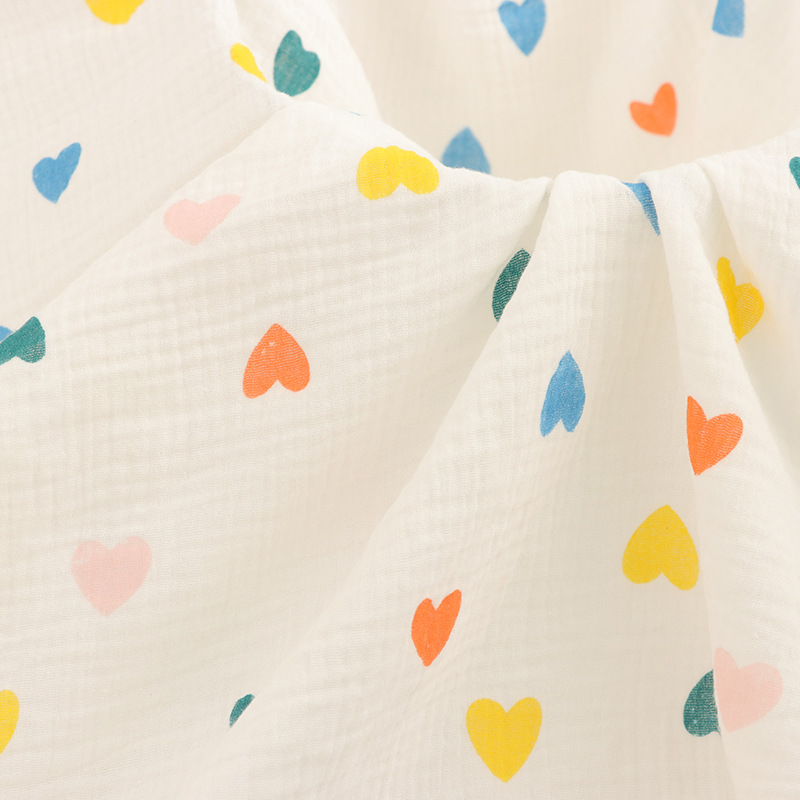
Women's wear brand procurement teams have a problem with chiffon fabric that doesn't get enough attention in the industry, and it's the problem I want to write about today: the same word "chiffon" is used to describe at least six distinctly different fabric constructions, and the supplier who can deliver one or two of them isn't necessarily the supplier who can deliver the full chiffon specification set that a women's wear program actually needs. I have watched women's wear brands qualify a supplier against a poly chiffon sample, place a production order, and then discover at the development review that the program also needs crepe chiffon, georgette, double chiffon, satin-back chiffon, and silk-blend chiffon — and the qualified supplier can only deliver one or two of those constructions. The supplier selection framework I'm going to outline today is built specifically to avoid this situation, because the women's wear brand procurement team that uses a "poly chiffon only" qualification framework ends up having to re-source half the program.
The reason this matters more in 2026 than it did in 2020 is that the women's wear market has segmented into distinct chiffon application categories — the occasion wear segment that uses silk-blend chiffon for evening dresses, the everyday blouse segment that uses polyester crepe chiffon, the resort wear segment that uses printed chiffon for vacation apparel, the modest wear segment that uses opaque chiffon for layering, and the bridal segment that uses silk satin-back chiffon. A women's wear brand that serves multiple segments needs the supplier who can deliver the full chiffon specification set, not just the most common polyester chiffon. The supplier selection decision has to be made with the full program specification in view from the start, not after the qualification has been completed for a narrow specification.
The Chiffon Fabric Construction Family — Six Specifications
Let me walk through the six chiffon fabric constructions that women's wear brands typically need to evaluate at the supplier selection stage, because the construction specification determines the yarn specification, the dye specification, the finish specification, and ultimately the supplier qualification approach. The supplier who can deliver the full six-construction family is the supplier who wins the women's wear wholesale program.
The first specification is polyester chiffon, the most common and the most accessible of the chiffon family. Polyester chiffon is typically 75D or 100D polyester filament yarn, woven in a plain weave with a crepe twist yarn to create the slightly textured surface. The poly chiffon specification is typically 60-90 GSM, with width 150cm. This is the entry-level chiffon and the most price-competitive, used in everyday blouses, scarves, and basic dresses. The supplier selection for poly chiffon is the most price-sensitive, and many suppliers in the global market can deliver this specification.
The second specification is polyester crepe chiffon, sometimes called "crepe de chine" if the crepe is particularly fine. Crepe chiffon uses highly twisted crepe yarn (typically 2000 twists per meter) to create the characteristic pebbled surface texture that distinguishes it from regular chiffon. The construction is typically 100-130 GSM, with the heavier weight contributing to the better drape. The crepe specification is more demanding than the poly chiffon specification and eliminates many suppliers from the qualified long-list.
The third specification is double chiffon (also called "double georgette"), which uses two layers of crepe yarn woven together to create a fabric with two right sides and the opaque drape that modest wear programs require. The double construction is typically 130-160 GSM, with the opacity achieved through the double layer rather than the yarn density. Double chiffon is the specification for modest wear blouses, layered dresses, and resort wear that requires sun protection.
The fourth specification is satin-back chiffon, which has a matte crepe face and a satin-sheen back, achieved through a satin weave on the back of the fabric. The construction is typically 100-130 GSM, with the satin back giving the fabric a two-tone appearance depending on how it's used. Satin-back chiffon is the specification for evening blouses, occasion wear, and bridal applications where the sheen effect is part of the design.
The fifth specification is silk chiffon and silk-blend chiffon, used in the highest-end women's wear programs. Pure silk chiffon uses 100% mulberry silk filament yarn, typically 20/22D, in a plain weave with low-density construction. The fabric is delicate and expensive (typically 4-6x the price of polyester chiffon) and requires a supplier with silk-specific production capability. Silk-blend chiffon (typically 30/70 or 50/50 silk/polyester) provides some of the silk aesthetic at a more accessible price point.
The sixth specification is printed chiffon, which is typically a base construction (poly chiffon or silk chiffon) with custom or stock printed patterns. The printing capability is what distinguishes a printed chiffon supplier from a base chiffon supplier, and the women's wear brand qualification should verify both the base construction capability and the printing capability separately. The reference for Suerte's printed chiffon is our custom color soft plain chiffon polyester fabric for dress product line, which demonstrates the base construction and the custom color capability.
How to Evaluate Chiffon Fabric Hand-Feel and Drape
Chiffon fabric selection is one of the few fabric categories where the hand-feel and drape evaluation matters as much as the technical specification, and the procurement decision typically requires physical sample evaluation that can't be replaced by documentation. The hand-feel is the tactile quality of the fabric when touched and crumpled in the hand, and the drape is the way the fabric falls when hung. Both of these qualities are subjective to some degree, but the evaluation can be standardized through a few practical tests.
The hand-feel evaluation is typically done by crumpling a sample in the hand for 10 seconds, releasing it, and observing the wrinkle recovery. Polyester chiffon has high wrinkle recovery (the fabric bounces back to its original smooth state), while silk chiffon has lower wrinkle recovery (the fabric retains the crumple marks briefly). The procurement decision depends on the program segment — high-end occasion wear typically prefers the silk hand-feel, while everyday blouse programs typically prefer the poly recovery.
The drape evaluation is typically done by holding a sample at one corner and observing how the fabric falls. A high-quality chiffon drapes in soft, fluid folds, while a lower-quality chiffon drapes in stiffer, more angular folds. The drape is determined by the yarn twist density, the fabric weight, and the finishing treatment. A supplier who can demonstrate consistent drape across production batches is the supplier who clears the women's wear brand's hand-feel and drape evaluation.
The transparency evaluation is done by holding the sample against a light source and observing the level of opacity. Standard poly chiffon is somewhat transparent, double chiffon is opaque, and crepe chiffon is in between. The transparency rating affects how the chiffon is used in the program — transparent chiffon is for layering applications, opaque chiffon is for standalone garment applications. The procurement decision has to match the transparency rating to the program use case.
The Print Quality and Color Depth Specifications for Chiffon
Chiffon fabric printing is its own specification category, separate from the base construction, and the women's wear brand procurement team has to evaluate the printing capability as a separate qualification question. The print quality is determined by the printing process (digital vs. rotary screen), the dye type (disperse vs. reactive vs. acid), and the post-printing finishing. A printed chiffon sample that looks excellent in the first production batch can vary significantly in the second and third batches if the supplier's printing process isn't consistent.
The color depth is the visual intensity of the printed color, which is determined by the dye saturation, the fabric absorbency, and the post-printing washing process. Women's wear programs that specify deep saturated colors (deep navy, deep burgundy, deep emerald) need a supplier who can deliver color depth without the dye migration or bleeding that compromises the visual quality. The supplier's color depth capability is best evaluated through side-by-side comparison of multiple production batches.
The print registration accuracy is the alignment between the print pattern and the fabric grain, which matters for patterns that have specific orientation requirements (geometric prints, asymmetric prints, engineered prints). The supplier's registration accuracy is typically rated in millimeters of acceptable deviation, with the higher-end women's wear programs requiring 2mm or less deviation across a 100cm fabric width. The qualification should verify the supplier's registration accuracy through a multi-batch sampling process.
The print durability is the resistance of the printed pattern to washing, light, and perspiration, which is tested under the relevant AATCC and ISO standards. The women's wear program specification typically requires 4-5 grade wash fastness (after 5 wash cycles) and 4 grade light fastness. The supplier's print durability documentation should be dated within the prior 12 months, with the test report specifying the print method and the dye type used.
Why One-Stop Sourcing Matters for Women's Wear Chiffon Programs
The one-stop sourcing model for chiffon fabric means a single supplier providing the full six-construction family described above, with the printing capability, the color match capability, and the finishing treatment options. The alternative is multi-supplier sourcing where each chiffon construction comes from a different supplier, which is what women's wear brands used to do historically because each chiffon supplier specialized in one or two constructions. The one-stop model has emerged as a procurement preference for the same reasons that apply to the workwear fabric category — supplier management overhead reduction, consistent substrate quality, and compressed development cycles.
The one-stop advantage for chiffon is particularly significant because women's wear programs often launch with one or two constructions and expand into additional constructions as the program matures. A supplier who can scale with the program from a single construction to the full family is the supplier who becomes the strategic partner. A supplier who delivers one construction well but can't expand is the supplier who gets replaced when the program grows.
Suerte's chiffon fabric one-stop capability covers the poly chiffon, crepe chiffon, double chiffon, satin-back chiffon, and printed chiffon specifications, with silk-blend variants available for higher-end programs. The reference product for the printed chiffon specification is our red solid color custom polyester cheap plain chiffon fabric product, and the satin-back specification is our high glossy smooth soft polyester silk satin fabric for dress product. The full women's wear fabric catalog includes complementary specifications. The reference product line is our love crepe chiffon fabric and the custom color soft plain chiffon polyester fabric for dress product line, which demonstrate the construction and finish capability that women's wear brands require for the full chiffon program. For women's wear program diversification into knit fabrics, our pink knitted polyester stretchy jersey fabric and soft feeling knitted ponte di roma fabric specifications provide the structured knit options that pair with the chiffon program.
The Supplier Selection Criteria for Women's Wear Chiffon
The supplier selection framework for women's wear chiffon has six questions that I recommend brand procurement teams evaluate, and these are specific to the women's wear chiffon specification rather than generic fabric qualification questions. A supplier who passes all six is what the women's wear brand is looking for.
Question 1 — Construction Family Coverage. "Confirm which of the six chiffon constructions (poly chiffon, crepe chiffon, double chiffon, satin-back chiffon, silk chiffon, silk-blend chiffon) the supplier produces in-house. For constructions produced by partner facilities, identify the partner facility and confirm the supplier's quality oversight process." This question maps the supplier's coverage against the brand's program specification, and a supplier who covers only 1-2 of the 6 constructions isn't qualified for the full program.
Question 2 — Print Capability. "Provide printed chiffon sample books covering the supplier's standard print range, the custom print minimum order quantity, and the print process (digital, rotary screen, or both). Confirm the print registration accuracy and color depth capability." The print capability is critical for the women's wear program because the print is what distinguishes the brand's products from the basic chiffon offerings in the market.
Question 3 — Color Match Capability. "Provide color match capability documentation, including the supplier's standard color range, the custom color match minimum order quantity, and the Pantone or RAL conversion capability. Provide a color match sample for the brand's primary program colors." The color match capability is critical for the women's wear program because the program color palette is part of the brand identity, and the supplier's color match accuracy determines whether the program can scale.
Question 4 — Hand-Feel and Drape Sample Range. "Provide physical samples of the full six-construction family for the brand-side hand-feel and drape evaluation. Provide production samples (not just sample yardage) to ensure the sample represents the actual production quality." The physical sample evaluation is critical for chiffon because the hand-feel and drape can't be evaluated from documentation alone.
Question 5 — Production Capacity for Women's Wear Program. "Provide monthly production capacity for the chiffon specification set, with the lead time from purchase order to ex-works shipment. Confirm whether the supplier can support the brand's expected program volume scaling over the next 12-18 months." The capacity question is critical for the women's wear program because the volume scaling is typically more rapid than the procurement team initially plans for.
Question 6 — Compliance and Certification Documentation. "Provide current OEKO-TEX Standard 100 certificate, REACH SVHC declaration, and any other compliance documentation relevant to the brand's distribution markets. Confirm the certification scope includes the chiffon construction set being supplied." The compliance question is critical for the women's wear program because the program typically sells into multiple regulatory jurisdictions.
The Chiffon Specification Mistakes Women's Wear Brands Should Avoid
Let me name the most common chiffon specification mistakes I see women's wear brand procurement teams make, because the supplier selection framework is designed to catch these specific issues.
The first mistake is specifying GSM without specifying the construction type. Two chiffon fabrics at the same GSM can have completely different drape, opacity, and hand-feel depending on the construction. A 100 GSM poly chiffon is a different fabric than a 100 GSM crepe chiffon, and specifying only the GSM leaves the supplier room to deliver the wrong construction. The procurement specification should always specify both the GSM and the construction type.
The second mistake is failing to specify the print side orientation. Chiffon fabric is often printed on one side only, and the print side orientation matters for the garment construction (some patterns are designed to be cut with the print side up, others with the print side down). The supplier should be required to confirm the print side orientation and to mark the fabric edge with the print side direction.
The third mistake is failing to specify the shrinkage allowance. Chiffon fabric, particularly crepe chiffon and silk chiffon, can have higher shrinkage than the standard 3% allowance. The supplier's shrinkage specification should be confirmed, and the brand's marker-making should account for the actual shrinkage rather than the standard allowance.
The fourth mistake is under-specifying the color fastness to light. Chiffon used in resort wear and summer occasion wear is exposed to high UV loads, and the light fastness specification should be confirmed at the sample stage. A chiffon that fades after 40 hours of light exposure is unsuitable for resort wear programs, even if the hand-feel and drape are excellent.
The fifth mistake is failing to verify the supplier's print registration across multiple production runs. A printed chiffon sample that looks excellent in the first production run can shift registration in the second and third runs. The brand qualification should require the supplier to provide multiple production batch samples for registration verification before qualifying the supplier for the wholesale program.
What We See in Our Work with Women's Wear Brands
We have worked with women's wear brands across Europe, the US, and Asia, and we see the same chiffon specification problem repeating across the programs we support. We see women's wear brands qualifying a supplier against a poly chiffon sample, then discovering that the supplier cannot deliver crepe chiffon, double chiffon, or printed chiffon for the broader program. We see this problem occurring in approximately 30% of the women's wear programs we engage with, and we recommend that women's wear brands adopt the six-construction framework before the supplier qualification begins.
We have observed that the hand-feel and drape evaluation is the most important practical test for chiffon fabric selection, and we see brands that skip this evaluation at the qualification stage end up with a fabric that doesn't match the consumer expectation. We recommend the hand-feel evaluation for every women's wear chiffon program, and we have built our chiffon sample pack to serve this evaluation requirement.
We typically recommend that women's wear brands test at least 3-4 production batches of printed chiffon before locking in the supplier, and we see this multi-batch verification protocol reducing the production batch rejection rate by approximately 25% in the programs we support. We have built our printed chiffon quality control process around this multi-batch verification approach.
Our team at Suerte has built our chiffon fabric one-stop capability to serve the six-construction family, and we see the results in the brand qualification success rate. We see women's wear brands that use our one-stop capability complete the qualified short-list in 6-8 weeks, compared to 14-20 weeks for brands that use the multi-supplier sourcing model.
Frequently Asked Questions — Chiffon Fabric Supplier Selection for Women's Wear
Q: Is polyester chiffon an acceptable substitute for silk chiffon?
For most women's wear programs, poly chiffon is a different fabric rather than a substitute for silk chiffon. Poly chiffon has higher wrinkle recovery and lower drape fluidity than silk chiffon. For high-end occasion wear, silk chiffon is typically preferred for its hand-feel and aesthetic, while poly chiffon is preferred for everyday blouse programs for its durability and price.
Q: What's the typical price difference between poly chiffon and silk chiffon?
Silk chiffon is typically 4-6x the price of poly chiffon due to the raw material cost. Silk-blend chiffon (30/70 or 50/50 silk/polyester) is typically 2-3x the poly chiffon price, providing a middle ground for women's wear programs that want some of the silk aesthetic at a more accessible price point.
Q: How important is the double chiffon specification for modest wear programs?
Double chiffon is the standard specification for modest wear blouses, layered dresses, and resort wear that requires sun protection. The double layer construction provides the opacity that modest wear programs require, and the hand-feel and drape are typically preferred over the equivalent opacity achieved through higher yarn density in single-layer chiffon.
Q: Can a women's wear supplier ship custom printed chiffon samples?
Reputable suppliers maintain custom print sampling capability. Suerte ships custom printed chiffon samples within 14-21 days of receiving the print design. The custom print sampling typically requires a digital file of the design in vector format or high-resolution raster format, with the color specification in Pantone or RGB.
Q: What's the typical MOQ for women's wear chiffon wholesale orders?
Standard poly chiffon specifications have MOQ of 500-1000 kg per color. Crepe chiffon and double chiffon typically have higher MOQ of 1000-2000 kg per color. Custom printed chiffon has higher MOQ of 1500-3000 kg per print, depending on the print complexity and the number of colors.
Q: How do I verify a supplier's silk chiffon authenticity?
Request the OEKO-TEX or equivalent certification for the silk content, request the silk origin documentation (typically mulberry silk from China, India, or other source countries), and conduct a burn test on a sample — silk burns slowly with a smell of burnt hair, while polyester melts and forms a hard bead. The supplier should be transparent about the silk source and the certification.
Q: What's the typical lead time for custom color chiffon sampling?
From color specification to sample delivery is typically 7-14 days for standard poly chiffon and 14-21 days for crepe and double chiffon. Custom printed chiffon with custom color match requires 21-28 days for the combined color match and print sampling process.
Author and Contact
Written by Elena — Marketing Specialist at Shaoxing Surdai Textile Co., Ltd. Channel updates via Facebook and YouTube for ongoing chiffon fabric sourcing insights.